
Accounting Content Marketing Mistakes
Peer Voice | Season Timing | Partner Review | Keyword Targets | Blog-Only Mix | Partner Bylines | Stale Pages | Sales-Led Topics | Pricing Content | Wrong Metrics | FAQ
💡 Key Takeaways:
1) Most accounting content marketing mistakes are process errors, not writing errors. A slow approval queue, peer-level language, and traffic-based reporting cause more damage than weak headlines ever will.
2) Seasonal tax pages need roughly four to six months of index age before demand peaks, so filing-season content published during filing season rarely ranks in time to earn any work.
3) Firms that publish price ranges, decision checklists, and calculators book more qualified consultations than firms publishing blog posts alone, because buyers can self-qualify before they ever pick up the phone.
Every Fixed Mistake Turns Content Into Billable Clients
Most accounting firms overpay for content that never gets reviewed, published, or refreshed. Our accounting content marketing services fix that pipeline first, backed by 500+ keyword clusters mapped, 350+ landing pages optimized, 20M+ words published, $0 onboarding fees, and a free discovery call before you commit a dollar.
Mistake #1: Are You Writing for Other Accountants Instead of Clients?
Accounting content usually fails at the audience level, because it gets written to survive partner review rather than to answer a buyer’s question. Peer-grade precision reads as authority inside the firm and as noise everywhere else.
Why firms slip into peer voice
- Partners review copy like a technical memo
- Plain wording gets flagged as imprecise
- Writers borrow phrasing from official guidance
- Nobody in the chain speaks for the buyer
What the peer voice costs
Buyers search in symptoms, not statutes. A page built around information return compliance never meets the owner typing “do I have to send 1099s to my contractors,” so the query and the page never touch.
The damage compounds quietly. You keep publishing, the partner keeps approving, and the pipeline stays empty because the vocabulary gap sits between you and every person who might hire you.
How to correct it
Write to the question your intake team hears on the phone, then add one technical anchor per piece so the accuracy holds. Our writers keep a running file of verbatim client lines, and those lines become headings later.
Give a non-accountant veto over the first two paragraphs. If they can’t restate what the page is about, it goes back, and a solid content marketing guide for accountants will tell you the same thing.
Mistake #2: Publishing Filing-Season Content During Filing Season
Seasonal accounting pages need months of index age before they rank, so anything published in the middle of the rush arrives too late to matter. The demand curve and the publishing calendar move in opposite directions.
Where the bad timing starts
- Capacity, not strategy, sets the content calendar
- Topics feel urgent only when clients ask
- Partner availability collapses exactly when demand peaks
- Last season’s page was never refreshed
- Marketing waits for sign-off that never comes
The cost of arriving late
A page published at peak demand typically reaches its ranking ceiling once the season has already ended. You then wait a full cycle to collect on work you paid for months earlier.

A better publishing rhythm
Build seasonal pages in your quiet months and ship them four to six months ahead of demand. Summer is when smart firms write their extension content, and almost nobody does it.
Refresh the page that already ranks instead of building a fresh URL every cycle. Splitting authority across near-identical pages is one of the more expensive pitfalls we find during an audit, and it takes months to undo.
A documented content strategy for accounting firms prevents most of it, mostly by forcing someone to check the archive before commissioning anything new.
Timing note: If you only have room for one seasonal build this year, choose the topic with the longest tail rather than the biggest peak, because pages about extensions, amended returns, and quarterly estimates keep earning between rushes while a pure January page sits dormant for ten months and gives you almost no data to work with.
Mistake #3: Is Partner Review Quietly Killing Your Publishing Cadence?
Partner review turns into a bottleneck when it sits at the end of the process instead of the beginning. Approval is a real requirement, but treating it as a final gate is what strangles output.
Why the queue keeps growing
- Review happens after the draft is finished
- No single named approver owns sign-off
- Revision rounds have no defined limit
- Everyone comments, nobody decides
- Busy season freezes the entire pipeline
- Writers over-hedge in anticipation of edits
What the delay actually costs
Two published pages a month beats eight perfect pages a year, and the gap shows up in indexing speed first. Search engines reward firms that publish on a predictable cadence, and a stop-start pattern reads as abandonment.
There’s a second bill nobody counts. Writers who expect heavy edits start writing defensively, which produces the hedged, unreadable copy the partner then complains about.
A workflow that survives busy season
Move technical review to the outline stage, where a partner spends 10 minutes instead of 90. Approve the angle and the claims before a single paragraph exists.
Name one approver, give them 48 hours, and treat silence as a yes. Build a pre-approved claim bank of figures and disclaimers the team can reuse, which is where AI automation for accounting firms saves the most hours.
Mistake #4: Are You Targeting Keywords Your Buyers Never Type?
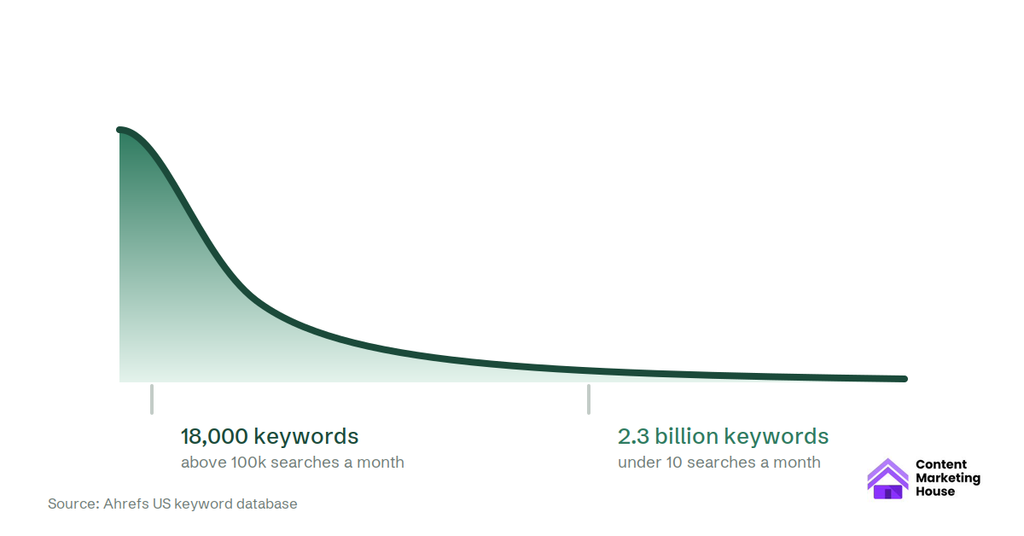
Broad head terms like “accounting services” attract researchers, students, and competitors, while the queries that produce consultations are narrow and situational. Search volume and buying intent point in different directions here.
The root cause behind broad targeting
- Volume looks better in a report
- Narrow terms seem too small to matter
- Keyword tools bury situational queries
- Service names get treated as search terms
What you lose chasing volume
You end up with traffic that never books anything. Across our client work, the pages that produce consultations are almost always the ones combining a problem with an entity type, and their volume looks unimpressive right up until the calls start.
What to target instead
Pair the service with the buyer’s situation: multi-state payroll for remote teams, R&D credits for pre-revenue software companies, revenue recognition for subscription businesses. The query gets longer and the close rate roughly triples in our experience.
Check the search results before you commit. If the top ten are directories and definitions, there’s no buyer behind that phrase, and the right content tools for accounting firms will show you that in a few minutes.
Mistake #5: Treating Content Marketing as a Blog Program
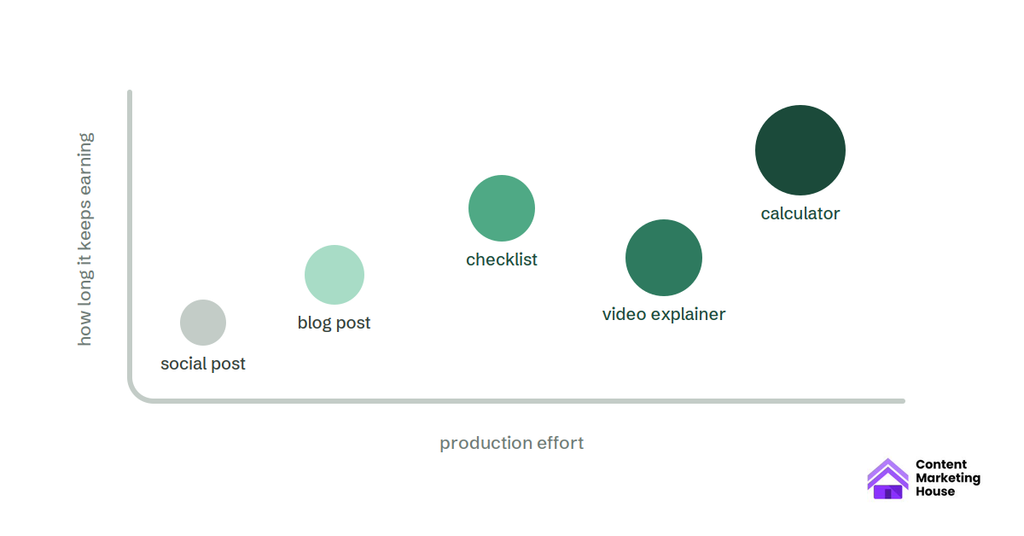
Content marketing covers far more than written posts: video explainers, calculators, checklists, podcasts, comparison pages, and email sequences all qualify. Accounting buyers, in particular, want to calculate something before they want to read something.
Why blogs become the default
- Blogs are cheapest to produce
- The CMS already has a blog
- Other formats need skills nobody has
- Word count feels like measurable progress
- Video sounds expensive before anyone prices it
The consequences of a one-format mix
A prospect who wants to know what their quarterly estimate should be gets a 1,400-word essay instead of a field to type a number into. They leave, run the math somewhere else, and hire whoever built the calculator.
What to produce instead
Add one interactive asset and one video per quarter, then let the written posts feed them. A rough entity-selection calculator we built for a bookkeeping client outperformed 14 blog posts on the same topic within about five months.
Worth knowing: The format debate splits practitioners honestly, and both camps have receipts: some firms swear by short video because accounting buyers want a face before they hand over their books, while others get better returns from tools and templates because the buyer wants an answer without talking to anyone yet, so test both against booked calls rather than views before you commit a budget.
Mistake #6: Why Do Your Partner Bylines Read Like Nobody Wrote Them?
Ghostwritten partner content goes flat when the writer never captures an actual opinion, leaving a byline attached to consensus advice. The name at the top promises expertise the page doesn’t deliver.
What drains the voice
- The interview gets skipped for a brief
- Partners edit out anything debatable
- Risk aversion sands off every specific
- Author bios list titles, not credentials
The damage to trust
Readers can tell. A piece with no position, no war story, and no admission of uncertainty gives a buyer nothing to prefer you over the firm ranked directly below you.
Search engines are running the same test through their experience and authority signals. Generic bylines are a warning sign to both audiences at once.

The fix that takes 25 minutes
Record a short interview per piece and mine it for one contrarian take the partner will defend in a room. Keep the messy detail: the client who ignored the advice, the quarter it went sideways.
Give every author a real bio with license type, specialization, and years in practice. It’s a small change with an outsized effect on how the page is judged.
Mistake #7: Are Your Old Tax Posts Quietly Giving Wrong Advice?
Outdated accounting content carries real liability, because thresholds, deduction limits, and filing rules change while your published page insists otherwise. Rankings decay too, though that’s the smaller problem.
How stale pages accumulate
- Nobody owns published content
- New posts feel more productive than updates
- Rule changes never reach the marketing team
- Old URLs disappear from internal reporting
- Archives grow faster than anyone can read them
- Deleting content feels like losing ground
What outdated content costs
A prospect who catches one wrong figure assumes the rest is wrong too, and that judgment extends to your services. Recovery from that impression takes far longer than the update would have.
The correction routine
Run a content audit twice a year and sort every page into keep, refresh, merge, or retire. Assign an owner and a review date to each surviving page, then publish both on the page itself.
Retire aggressively. Firms hoard old posts out of sentiment, and thinning an archive by a third often lifts what’s left, which surprises clients every time.
Audit tip: Start your checklist with any page containing a hard number, since dollar thresholds, percentage rates, and deadline dates go wrong first and carry the most risk, and work down toward the evergreen explainers that rarely need more than a light edit, because sorting by volatility instead of publish date finds the genuinely dangerous errors in about a tenth of the time.
Mistake #8: Are You Publishing What You Sell Instead of What Clients Search?
Firms build content around the advisory work they want more of, while buyers search for the compliance problems they already have. The mismatch shows up as thin traffic on your most polished pages.
Why the sales agenda wins
- Advisory carries better margins
- Compliance topics feel commoditized
- Partners want content about their growth goals
- Nobody checks demand before assigning topics
- Sales pages get mistaken for content
What this costs in pipeline
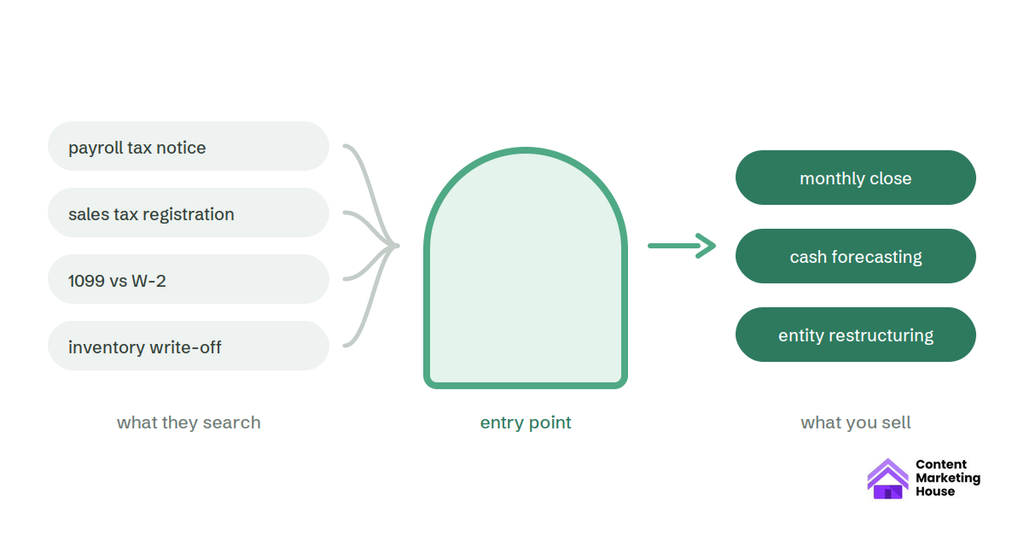
Almost nobody types “outsourced CFO services” cold. They type questions about cash flow, messy books, or a lender asking for statements, and those searchers are the exact people who become advisory clients eighteen months later.
The better sequence
Enter through the compliance question and exit toward the advisory offer inside the same page. The bookkeeping cleanup post should end where the fractional CFO conversation begins.
Let demand set the topic and let your positioning set the angle. Reversing those two is one of the more common traps we see in firm-led content plans.
Mistake #9: Why Won’t Your Firm Publish Anything About Price?
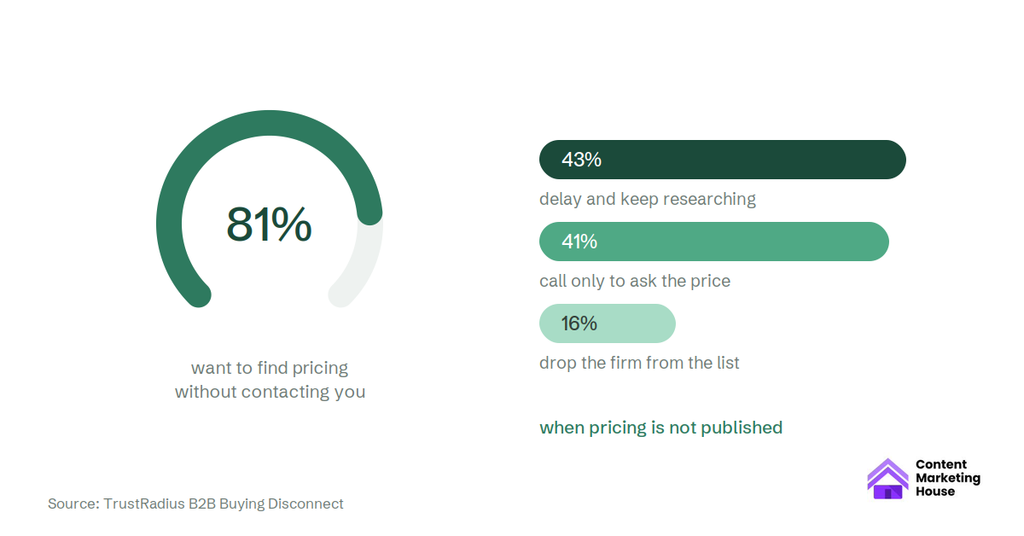
Accounting firms avoid pricing content because scope genuinely varies, and buyers read that silence as a red flag. Every competitor who publishes a range gets the call first.
Why the price page never ships
- “It depends” feels like the only honest answer
- Partners can’t agree on a number
- Fear of anchoring the market low
- Worry that competitors will undercut
What the silence costs
Buyers still find a number, just not on your site. They anchor on a competitor’s page or a forum thread, and your first call starts with an expectation you had no hand in setting.
Intake quality drops as well. Without a filter, your team spends its week on calls that were never going to close.
What to publish instead
Give a range, then explain what moves a client to the top or bottom of it: transaction volume, entity count, states, cleanup depth, reporting cadence. The explanation matters more than the number.
Buyers researching accounting content marketing cost behave the same way, which is why we publish ranges for our own work. Nobody has ever complained about knowing too early.
Mistake #10: Are You Measuring Traffic When You Should Measure Consultations?
Traffic reporting hides which pages actually produce clients, so firms cut the pages that work and fund the ones that don’t. Sessions are the easiest number to collect and the least useful one to act on.
Why the wrong metric sticks
- Analytics reports sessions by default
- Intake happens by phone and goes untracked
- The CRM has no source field
- Attribution setup gets postponed indefinitely
- Traffic charts look better in partner meetings
The real consequence
A page with 90 monthly visits that books three consultations outperforms a page with 4,000 visits that books none. Report by sessions and you’ll kill the first one within two quarters.
What to track instead
Add one question to your intake script: what were you reading before you called. It’s crude, it’s manual, and it beats most attribution setups we’ve inherited.
Then tag every consultation with a source in the CRM and review assisted conversions, not just last click. Firms running appointment setting for accounting firms alongside content see the connection faster, because the booking data lands in one place.
Keep in mind: Give any new measurement setup two full quarters before you judge a page, because accounting buying cycles stretch across a season and a page published in autumn often books its first consultation after the new year, meaning a 90-day review window will consistently condemn the exact long-form content that ends up producing your best-fit clients.
Accounting Content Marketing Mistakes FAQ
Disclaimer: This post is for general informational purposes only and does not constitute tax, legal, accounting, or financial advice. Figures, thresholds, and regulatory requirements change and should be verified with a qualified professional and against primary sources before you act on them. Content Marketing House accepts no liability for decisions made on the basis of this content.